Competitive Analysis

Track your brand's citations against competitors across all AI platforms. Identify citation gaps, monitor share of voice, and discover exactly where competitors dominate. The only competitive intelligence tool built specifically for AI search visibility.

Citation trends over time

Track how citations change across all competitors. Switch between line and bar charts to compare trends
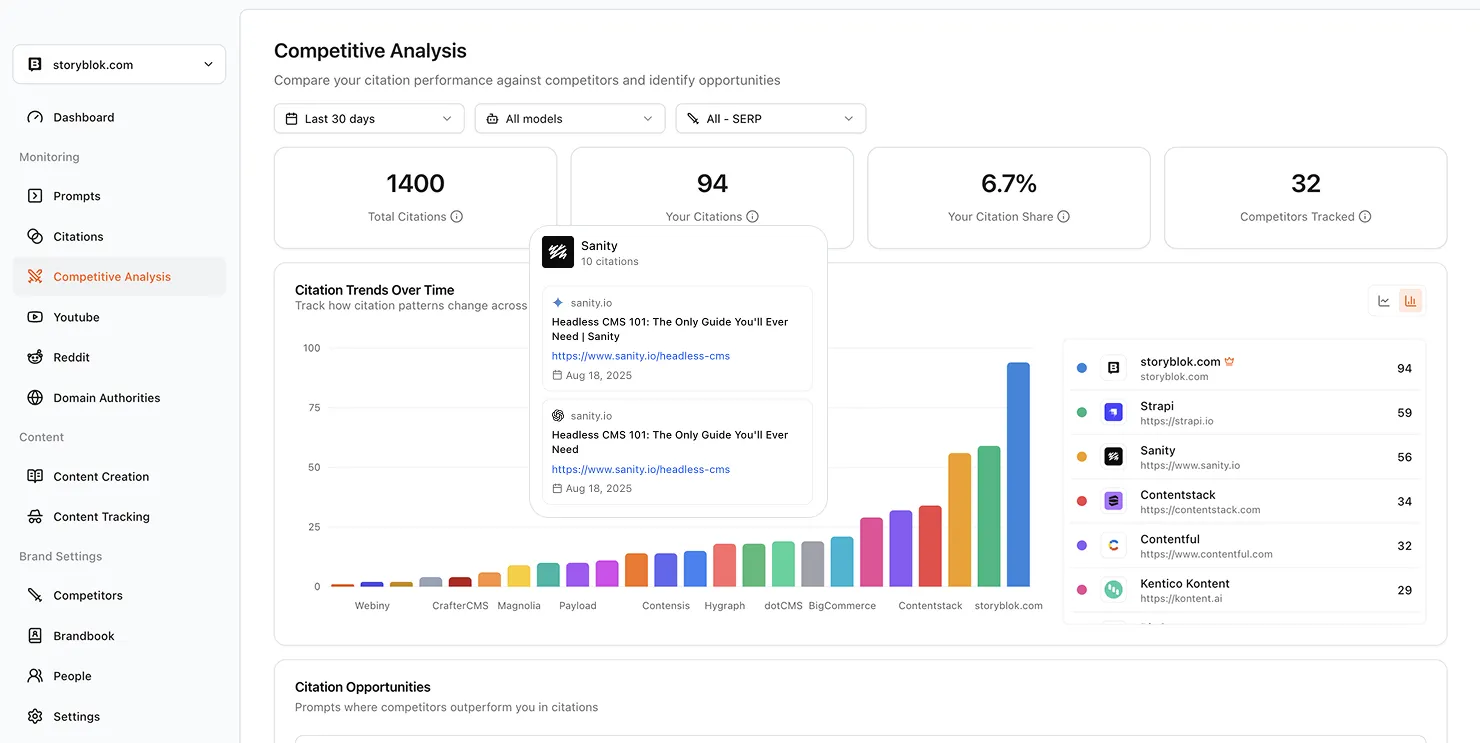
Competitive Analysis Dashboard

Direct vs SERP Competitors

Focus on designated direct competitors or view all brands appearing in responses

AI Model Breakdown

Filter by specific AI platforms to see which engines favor which competitors

Date Range Filtering

Analyze specific time periods to understand competitive shifts and identify trending patterns

Citation opportunities

Top prompts where competitors lead. See exactly which sources they're cited from and close the gap

Storyblok logo
Best headless CMS platforms
Visibility: 78%

Gap: 11 : 9

ChatGPT
Contentstack logo
Headless CMS vs. traditional CMS...
Visibility: 68%

Gap: 9 : 7

ChatGPT
Contentful Logo
Contentful vs Storyblok

11 : 9 citations

Sources
Contentful top domains:
contentful.com/blog
techcrunch.com
Click to see full citation breakdown

Competitive overview

Compare citations, share, position, and sentiment across all tracked brands

Storyblok
Storyblok
387 +15%
Contentful
Contentful
312 +8%
WordPress
WordPress
245 +4%

Full table includes share, position, sentiment & domain authority

Domain authority insights

Track citation quality with domain rank scores and high-authority counts

DR 70+ 124 citations DR 50-69 89 citations DR <50 99 citations

Position & sentiment tracking

Monitor where brands appear in AI responses and how they're perceived across all tracked prompts

Average position tracking shows where each brand ranks in citations
Sentiment gauges compare how positively AI describes each competitor
Co-mention analysis reveals which brands appear together most often

How teams use Competitive Analysis

Track competitors, identify gaps, and dominate AI search

Everything included in Competitive Analysis

All the competitive intelligence you need for AI search dominance.

Citation Share Tracking

Monitor your percentage of total citations across all tracked brands. See how your share changes over time and compare against industry benchmarks.

Multi-Brand Timeline

Track citation trends for up to 32 competitors simultaneously. Visualize who's rising, falling, or maintaining dominance in AI search.

Citation Gap Analysis

Identify the top prompts where competitors outrank you. See exactly which sources they're cited from and prioritize content gaps.

Sentiment Comparison

Compare how AI platforms describe your brand versus competitors. Spot perception gaps and monitor competitive sentiment trends.

Domain Authority Insights

See which competitors earn high-authority citations. Understand the quality behind citation counts and identify authoritative source opportunities.

AI Model Breakdown

Filter competitive data by specific AI platforms. Discover which engines favor which competitors and optimize accordingly.

Frequently Asked Questions

Everything you need to know about competitive analysis

How does competitive analysis work in ClayHog?

ClayHog tracks every time your brand and your competitors get cited across AI platforms like ChatGPT, Gemini, Perplexity, Claude, and Google AI Overviews. You'll see side-by-side comparisons of citation counts, share of voice, visibility scores, and sentiment ratings. The platform identifies citation gaps (prompts where competitors are mentioned but you're not) so you know exactly where to focus your content efforts.

What's the difference between Direct Competitors and SERP competitors?

Direct Competitors are brands you manually designate as your key competition. SERP competitors are any brands that appear alongside yours in AI responses, even if you don't consider them direct competitors. You can filter between these views to focus on what matters most: your core competition or the broader competitive landscape.

How do I use Citation Gap Analysis?

Citation Gap Analysis shows you the top prompts where competitors are getting cited more than your brand. For each gap, you'll see exactly which competitor is winning, by how much, and which sources they're getting cited from. Click into any gap to see the full citation breakdown (their URLs versus yours) so you can understand what content is driving their AI visibility.

What does Citation Share mean?

Citation Share is your percentage of total citations across all tracked brands. If 100 total citations appear for your industry prompts and your brand gets 25 of them, your citation share is 25%. This metric helps you understand your market position in AI search. Are you dominating the conversation or getting drowned out by competitors?

Can I see which domains competitors are getting cited from?

Yes! When you drill into a citation gap or competitive comparison, you'll see every URL where competitors are getting cited: the exact domain, page title, publication date, and domain authority score. This shows you which types of content AI engines prefer and where you might need to strengthen your own presence.

How often is competitive data updated?

All prompts are tracked daily, so your competitive analysis dashboard updates every day. You'll see trends over time: are competitors gaining ground or losing share? Are new competitors emerging? Historical charts show you exactly how the competitive landscape is shifting so you can react quickly to changes.

Have more questions? Learn more about GEO optimization or explore our learning center.

Find out what AI says about your brand

Turn AI insights into content that improves citations, relevance, and visibility across AI search.